Cowboy grime and Old West hygiene
By western author Nick Brumby
“Man does not live by soap alone; and hygiene, or even health, is not much good unless you can take a healthy view of it or, better still, feel a healthy indifference to it.” – G. K. Chesterton
Life on the Frontier was tough. Carving out your piece of the American dream from the wilderness usually meant rolling up your sleeves, plenty of elbow grease, and getting your hands dirty. However, personal hygiene was not always a priority in the rugged and dusty terrain of the Old West, and hands, elbows and sleeves often stayed dirty.
 The biggest reason for this was limited access to clean water. The classic dry climates common across the West only made the problem worse. Dependable water sources could go dry or stagnant, while outhouses dotted across each landholding would often pollute water sources for those downstream. Clean water was a precious resource, and folk conserved what little they had by rarely washing dishes, clothes, or their own bodies.
While French scientist Louis Pasteur’s theory of infectious ‘germs’ was slowly being accepted by the medical community at the time, many doctors out West still believed that ‘miasmas’ caused sickness and infections. The miasma theory held that diseases like cholera, smallpox, and dysentery were transmitted not from person to person, but through the air by foul-smelling vapors. As a result personal hygiene was not a high priority.
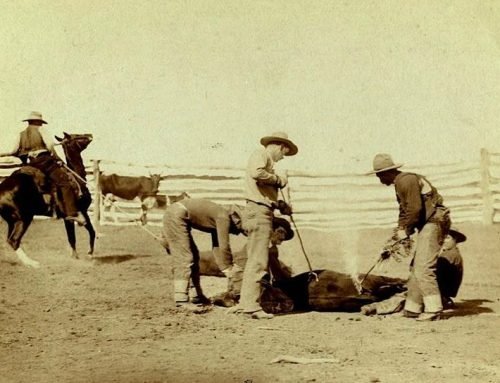
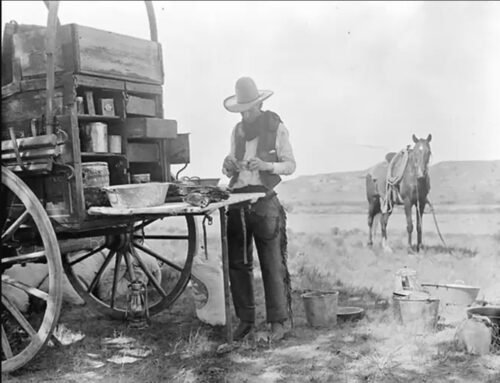
 The typical cowboy was a great example. Many were described as “smelling like their horse.” While to some extent this would have been due to cowboys spending endless days and nights riding his steed, more so it was due to few opportunities to change their clothes, bathe or enjoy anything more than a rudimentary wash. As a result, dirt, grime and skin bacteria soon accumulated. As a result, many cowpokes suffered from horrendous fungal infections.
Old West life was nothing if it wasn’t smelly and grimy. For example, chewing tobacco was a common habit among cowboys, miners, and even lawmen. Saloons were liberally supplied with spittoons, however many men didn’t bother using them, instead spitting tobacco juice wherever they chose, and leaving sticky brown puddles on floors and sidewalks. This habit was so widespread that ‘spit fights’ over where to (or not to) aim were common.
Saloon owners spread sawdust to absorb the deluge of spit, tobacco juice, spilled beer, and blood splashed across the floorboards, but Tuberculosis and other diseases were still a hazard for the unlucky or the unwary.
 Bathing was a family event. Soap was scarce, and water had to be carried by the bucket, heated on the stovetop, and poured into a small tub. Father would wash first, then mother, followed by each child in order of age, all in the same water. It’s no wonder they kept bathing to a minimum…
Sponge baths were more the norm for both men and women. While men could strip wherever they pleased and bathe in a creek if it were available, women could not. Instead, women had sponge baths indoors, usually wearing their long, heavy undergarments, due to the lack of privacy. As a result, their sponge bath was often more of a token gesture at hygiene than anything else.
Travelers of the period found a need for a more regular bathing. By the 1850s, several types of public baths were available. The most common was a bathhouse with private tubs. One example was from California in 1858 when public bath owners paid $2.00 for water per tub. The water was likely reused. An article in a Nevada newspaper from1863 reported that a bather who fell asleep for five and a half hours was charged $5.50, or a dollar per hour.
 The other common type of bath could be found in the brothels that flourished across the West. The book Good Time Girls of the Rocky Mountains notes that many brothels included private or shared bathrooms. For example, at the turn of the century, The Oasis, a parlor house in Idaho, charged between $50 and $80 for a bubble bath. Smiles were extra.
Women generally did their best to stay clean, but were hamstrung by the limited options available. Whiskey served a variety of purposes ranging from a disinfectant to a shampoo. When mixed with castor oil, or used alongside lye or lard soap, whiskey was also used to wash hair, which was then rinsed with rainwater or water softened with borax. When it came to women styling their hair, they used whatever they had to hand. Heated pencils were commonly used as rudimentary curlers.
Perfumes were also hard to come by across the West Thankfully, ‘Mum’ deodorant, made from a “waxy cream” and zinc oxide, came out in 1888. The market was soon saturated with similar products. According to Smithsonian Magazine, the first antiperspirant, called “Everdry”, was not introduced until 1903.
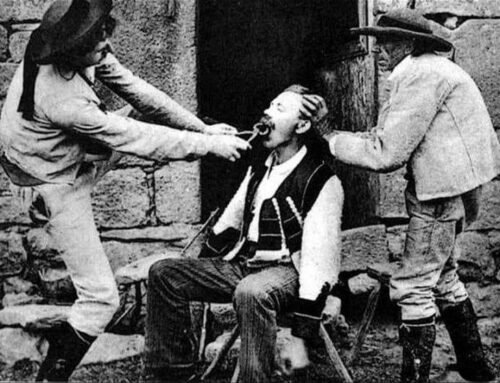
 The hardscrabble life lived by many across the Frontier often meant oral hygiene took a backseat to survival. Toothbrushes were a luxury, and brushing was an afterthought for many. Stagecoach stations and eating houses frequently provided a ‘community toothbrush’ for patrons, hung in publicly-accessible common area and available to anyone who felt the urge to scrub their choppers.
Colgate didn’t invent toothpaste until 1873. People instead used tooth powder, baking soda, salt, or campfire ash.
When it came to bathroom business, people had to get creative. Toilet paper wasn’t a thing in the early 19th Century, so they resorted to using corn cobs, torn pages from magazines, and catalogs. The smell was often so overpowering that standing near one would instantly make your stomach churn. In 1857 sheets of toilet paper started being sold individually, not on rolls. Roll-style toilet paper didn’t arrive until 1890, along with the invention of the toilet paper holder.
Living in the Old West certainly would have been an experience.

About Nick Brumby
I like a good story. And of all stories, I love westerns the most.
As a kid, I spent far too many afternoons re-watching Clint Eastwood spaghetti westerns, picking up ‘Shane’ for just one more read, or saddling up beside Ben Cartwright when ‘Bonanza’ was on TV each afternoon.
I’m a former journalist and I love horses, dogs, and the occasional bourbon whiskey. I live with my wife, daughter and our ever-slumbering hound in a 1800’s-era gold mining town – our house is right on top of the last working gold mine in the area. There may not be much gold left, but there’s history wherever you look.
I hope you enjoy my westerns as much as I enjoyed writing them!
Happy trails,
Nick